Quest
Innovative robotics project combining a drone with a rover.
introduction
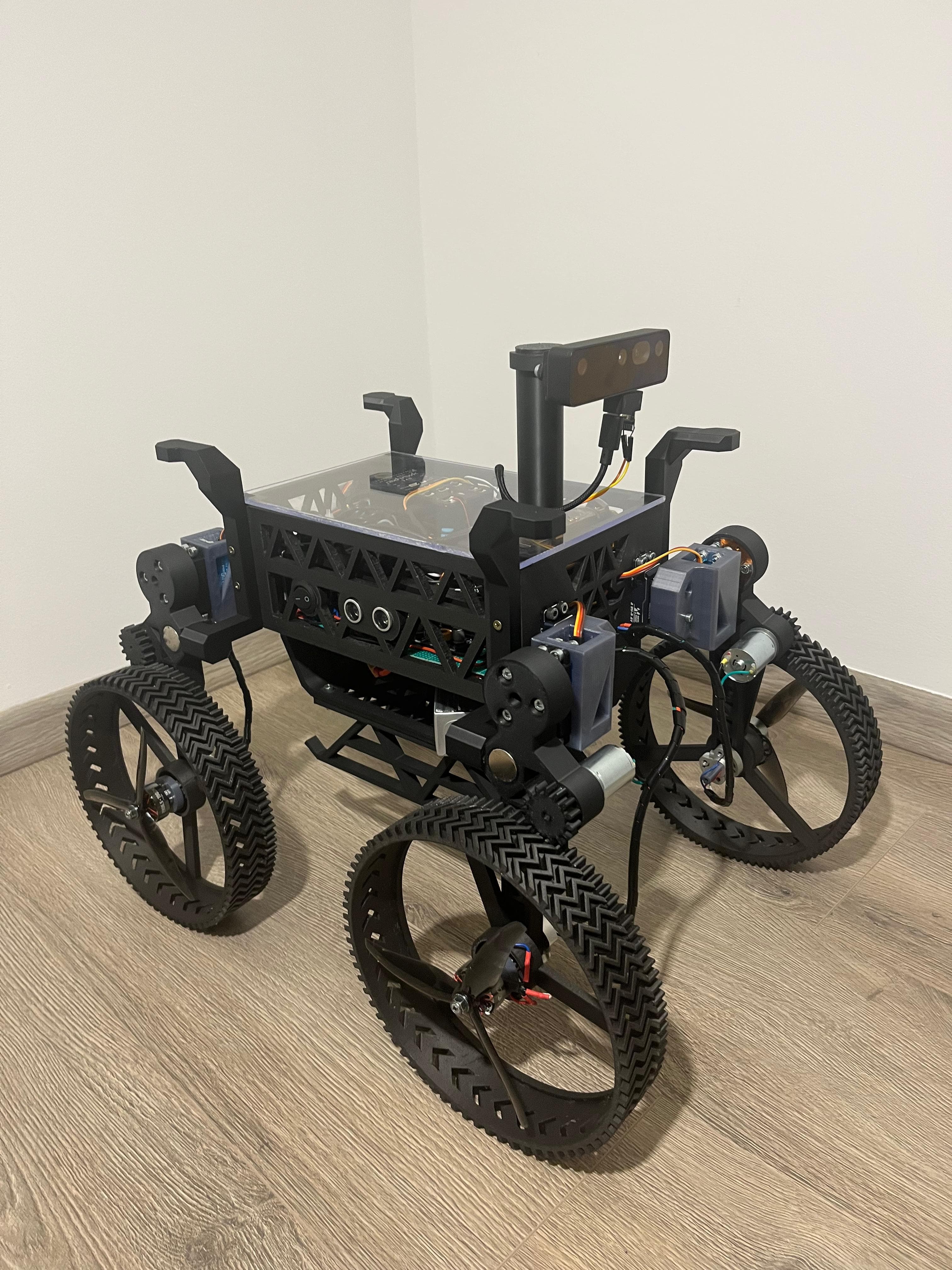
Quest is a multifunctional rescue robot designed to operate efficiently in critical and hard-to-reach environments. Developed by me and Alexandru-Lucian Motoașcă at Colegiul Național de Informatică “Grigore Moisil” Brașov, this project combines ground mobility and aerial versatility to assist in emergency missions such as locating missing persons, exploring caves, or supporting firefighting operations.
motivation
The idea behind Quest emerged from a real need for innovative tools that can save lives in extreme situations. Traditional rescue missions are often delayed or limited by terrain and safety constraints. Quest was imagined as a machine capable of overcoming these obstacles — a robot that can both drive on four wheels and take flight, reaching areas where human access is dangerous or impossible.
capabilities & usefulness
Quest operates in two main modes:
- —Rover mode: Moves on wheels, consumes minimal energy, and can transport small medical kits such as bandages or food to people trapped in hazardous zones.
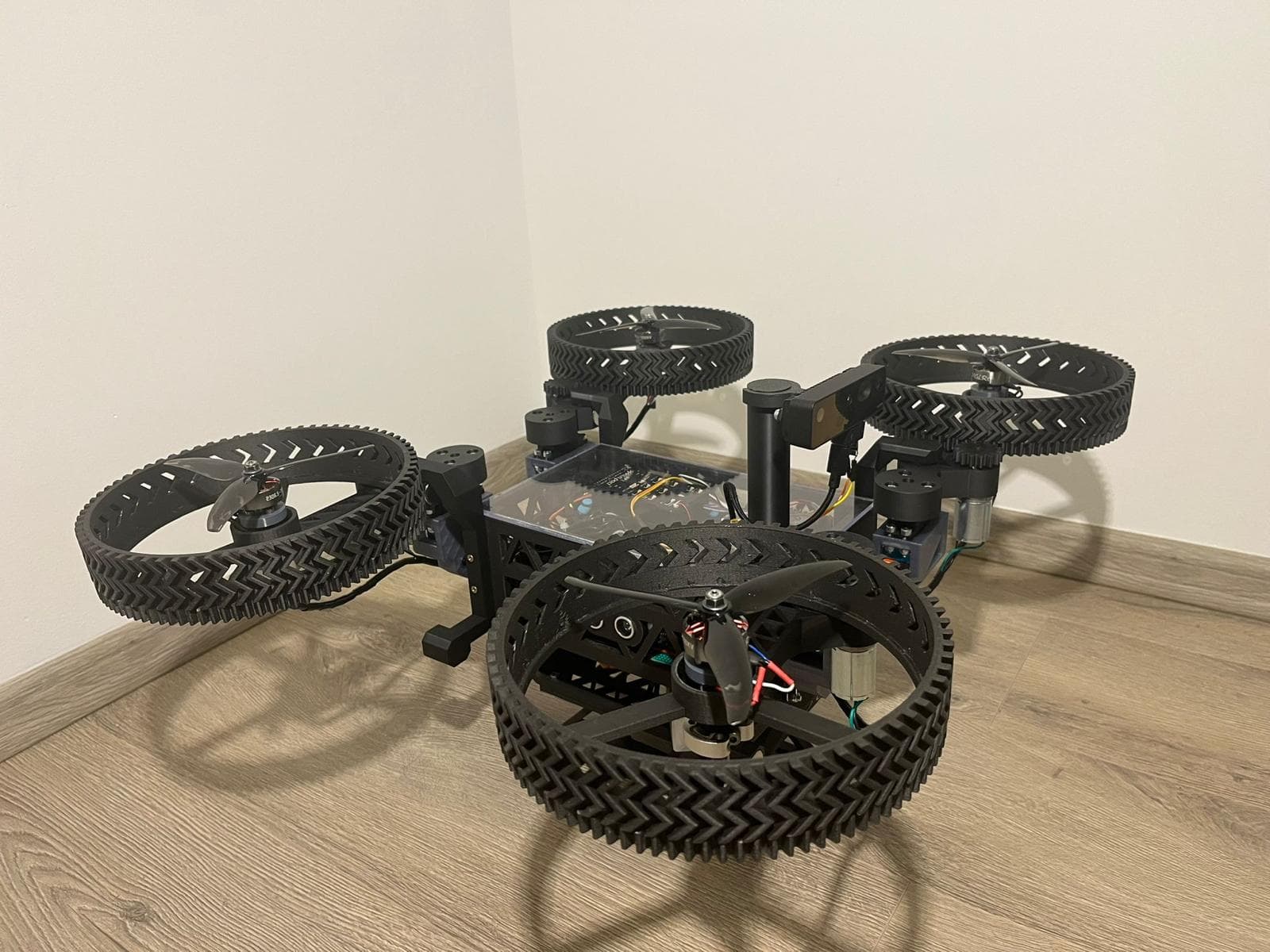
- —Drone mode: With a simple command, Quest extends its arms and transforms into a quadcopter, capable of scanning large areas from above. It can detect heat sources, locate survivors, and transmit live video data to emergency teams.
Equipped with a high-resolution camera, AI-based object detection, and real-time image transmission, Quest provides an intelligent and adaptive solution for both monitoring and active intervention.
design and structure
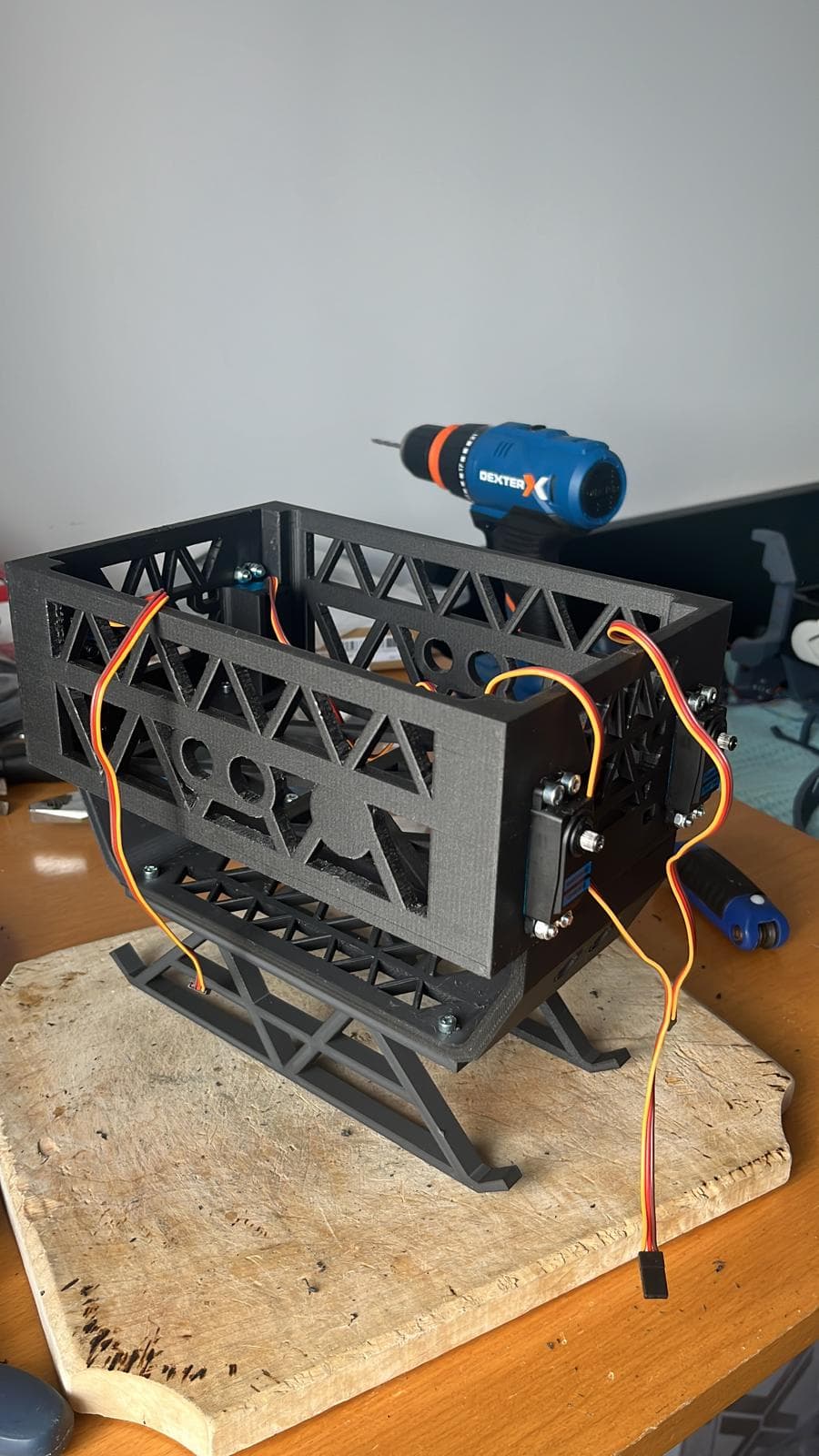
Mechanically, Quest is an elegant fusion of robotics and aeronautics. Its frame is 3D-printed using PETG and PETG-CF, ensuring strength without excessive weight.
- —Each leg integrates two servo motors for articulation.
- —Each wheel assembly includes a DC motor and a brushless motor with propeller for flight.
- —Magnetic supports reduce strain on servos and stabilize the robot even when unpowered.
- —The centrally placed battery ensures balance and easy replacement.
electronics and control
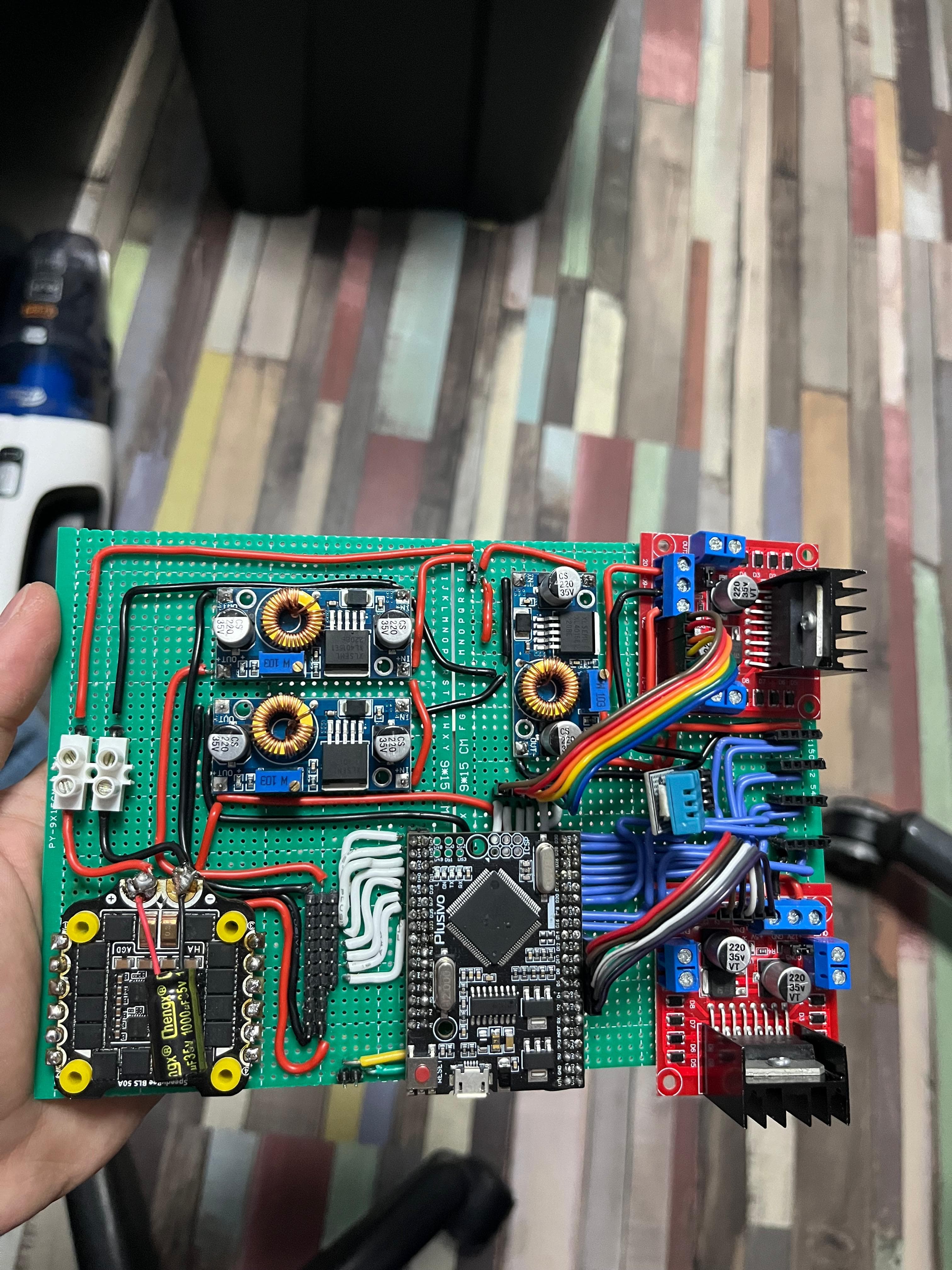
The electronic system integrates multiple components for stability and intelligence:
- —Raspberry Pi 4B – main controller managing overall coordination and communication.
- —Arduino Mega – controls servo and DC motors.
- —Pixhawk 2.4.8 – handles flight stabilization and telemetry.
- —OAK-D Lite – provides real-time vision with object detection using YOLOv8 nano.
The power system uses multiple voltage converters to safely supply all modules, while serial and UART communication links keep sensors, motors, and processors synchronized.
Software and AI
- —A Flask-based backend hosted on Raspberry Pi for communication and data routing.
- —Socket.io for real-time video and telemetry streaming.
- —Integration with YOLOv8n on OAK-D Lite for object and human detection.
- —A React-based web interface hosted on Firebase, accessible through a secure ngrok tunnel.
- —Custom Arduino firmware managing low-level control and safety fallbacks.
Future Development
Quest continues to evolve with potential improvements such as:
- —Higher-capacity batteries for extended missions.
- —Integration of gas and thermal sensors for hazardous environments.
- —Machine learning for autonomous navigation and improved object recognition.
- —Collaborative multi-robot communication for large-scale search missions.
Action Demos
Watch Quest in action as it navigates terrain and demonstrates its dual-mode capabilities.
Camera Perspective
A glimpse through the OAK-D Lite camera, showing the real-time perspective and environmental awareness of the robot.
Conclusion
Quest represents a fusion of creativity, engineering, and purpose — a machine built not just to demonstrate technical ability, but to save lives. Through the combination of robotics, AI, and intelligent control systems, Quest pushes the boundaries of what small-scale autonomous systems can achieve in emergency response.