RippleTrace
A Financial GraphRAG engine that predicts and visualizes global supply chain and market risks.
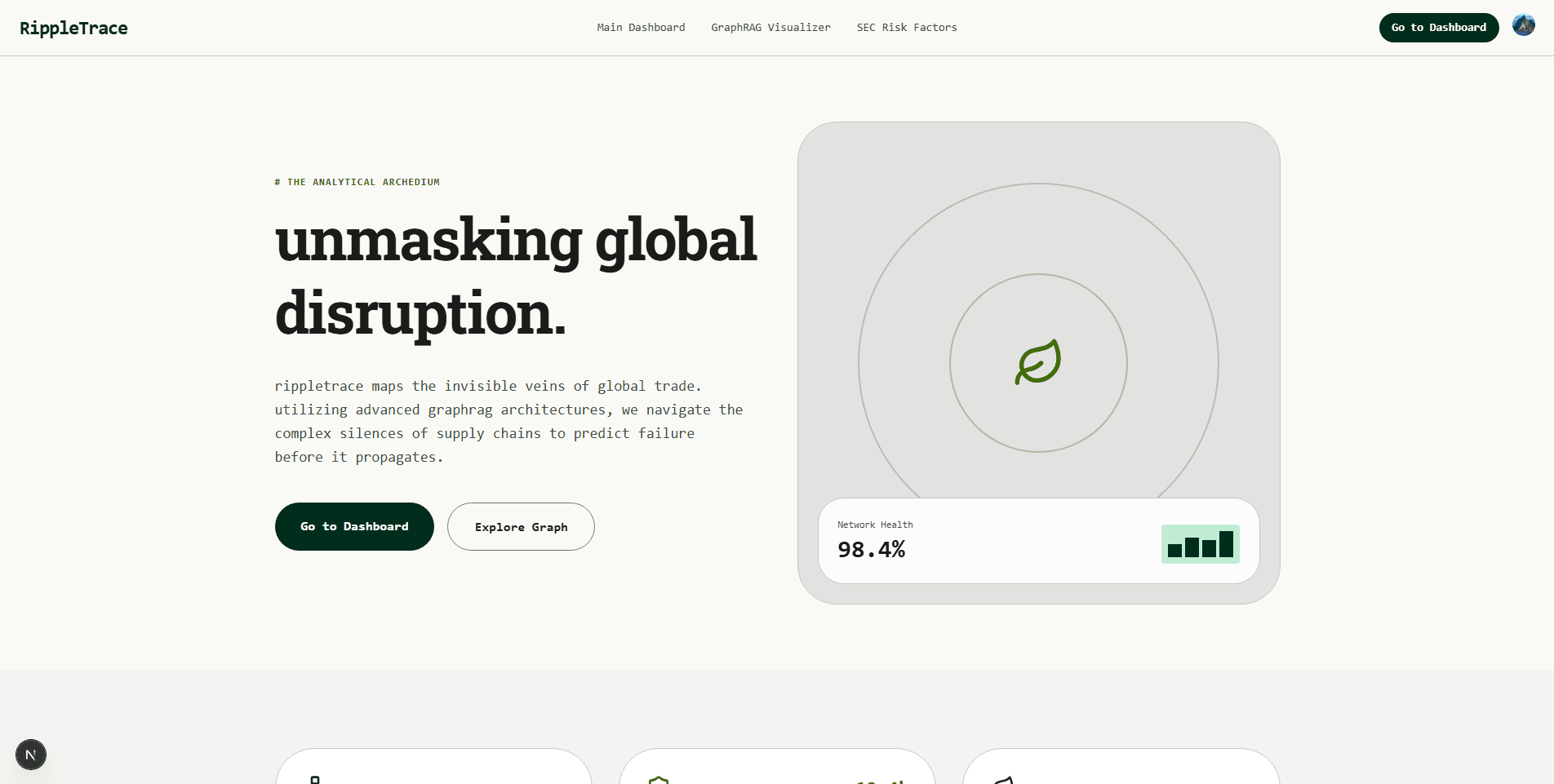
overview
RippleTrace is a specialized Graph Retrieval-Augmented Generation (GraphRAG) platform designed to map and quantify 'ripple effects' in global financial markets. It transforms unstructured news and dense regulatory filings into a structured Neo4j Knowledge Graph to uncover non-obvious dependencies.
technical architecture
The system follows a 'Source-to-Graph-to-Inference' pipeline, optimized for low-latency financial intelligence:
- —Data Ingestion: High-throughput crawlers for Alpaca/Yahoo Finance and a specialized SEC 10-K 'Risk Factor' parser via sec-api.
- —Graph Database: Neo4j acts as the primary source of truth, storing entities and high-dimensional relationships.
- —Backend Engine: FastAPI with a modern lifespan architecture for efficient database connection pooling.
- —Frontend: Next.js 15+ application utilizing react-force-graph for interactive supply chain visualization.
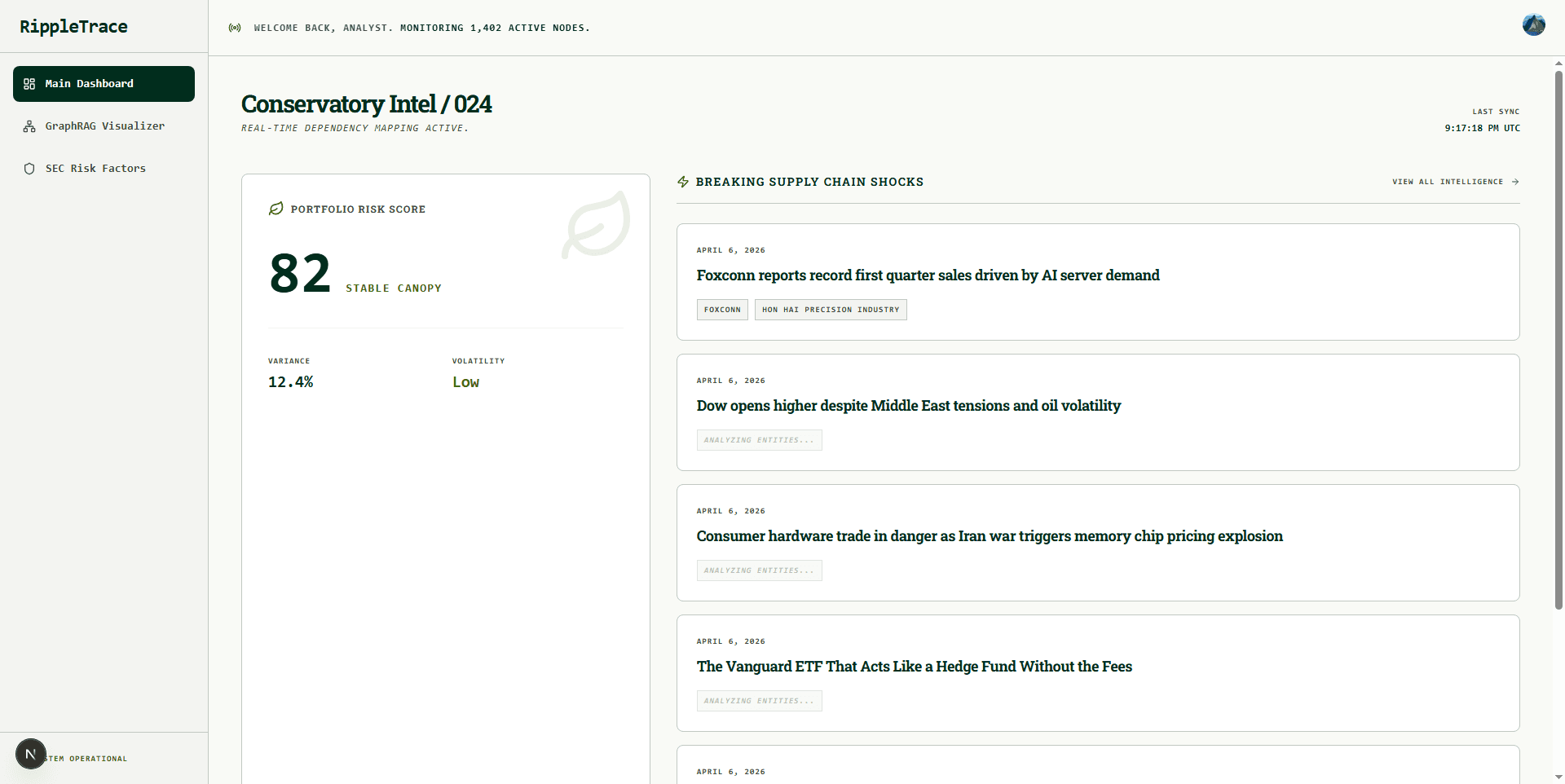
tiered model strategy
RippleTrace employs a dual-model approach to balance speed and reasoning depth:
- —Llama 3.1 8B (Instant): Processes real-time news articles, prioritizing high throughput for daily event extraction.
- —Llama 3.3 70B (Versatile): Leveraged for deep reasoning on SEC 10-K filings, where a large context window and complex entity resolution are required to parse dense legal language.
- —Groq Inference: All extractions utilize ChatGroq for sub-second LLM response times.
knowledge graph ontology
The system utilizes a custom financial ontology in src/extractor.py, moving beyond simple NER to risk-aware graph extraction:
- —Specialized Entities: Risk_Event (disasters, strikes), Raw_Material, Product, Financial_Metric, and Market_Index.
- —Directed Relationships: VULNERABLE_TO / EXPOSED_TO (future risk mapping), IMPACTS_METRIC (linkage to quantitative data), and SUPPLIES / DEPENDS_ON (vertical supply chain backbone).
- —Data Lineage: Every entity is connected to its source via a REPORTS_ON relationship, providing perfect traceability from a graph node back to the original article snippet.
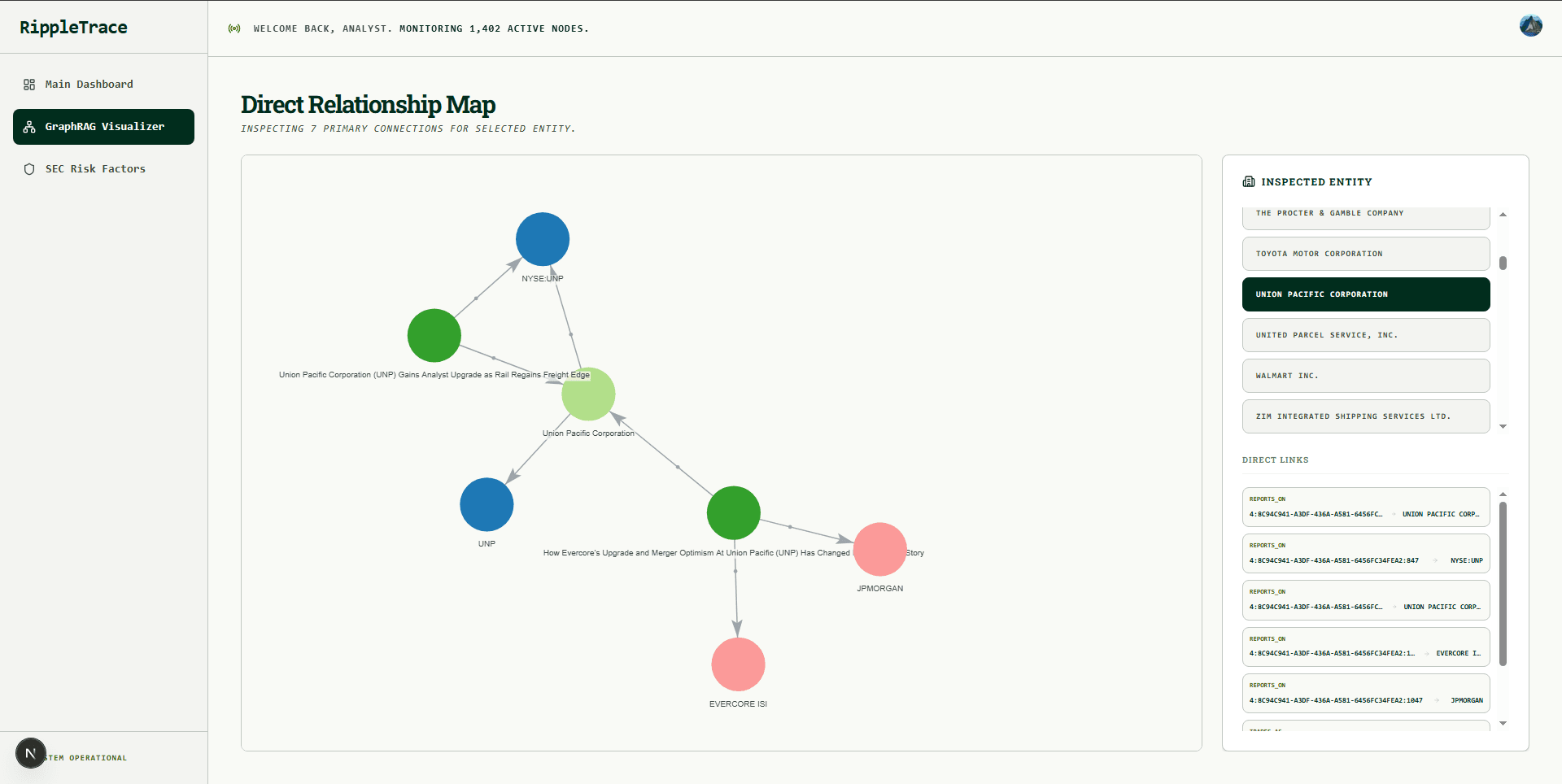
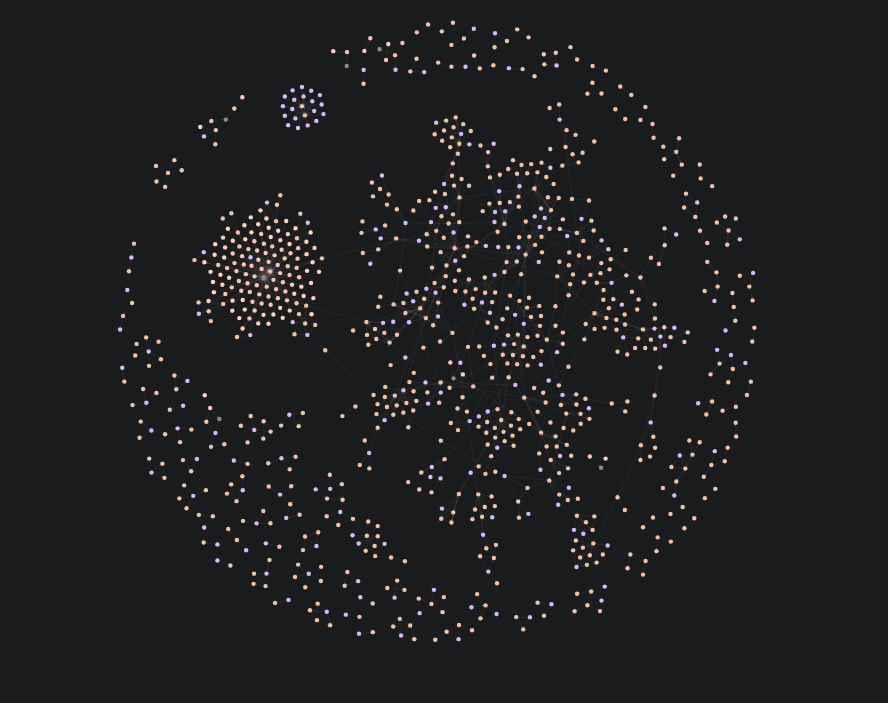
graph database visualization
The extracted knowledge is persisted in a Neo4j instance, enabling complex multi-hop queries to trace risk propagation through the global supply chain.
graphrag & traversal logic
Instead of standard vector search, RippleTrace uses structural graph traversal for deterministic context retrieval:
- —2-Hop Neighborhoods: The API retrieves subgraphs centered around a ticker, filtering out 'Region' nodes to eliminate network noise while maintaining supply chain context.
- —Structural Reasoning: The risk-assessment endpoint identifies exact dependency chains (e.g., 'Port Strike' -> 'Semi-conductor Plant' -> 'Tech Ticker') to feed the LLM hallucination-free context.
- —Path Normalization: Custom Python logic in the API layer handles path reconstruction to ensure data integrity during complex multi-hop Cypher queries.